
Pick up a brush and paint a Picasso!


In this Artist Masterclass I will show you how to recreate one of Picasso’s abstract portraits of Sylvette.
Did you know that Picasso is considered one of the most influential modern artists and is widely acknowledged to have developed the Cubist style alongside his contemporary Georges Braque?
Picasso was highly prolific, during his 78 year career. According to PabloPicasso.org he created around: 13,500 paintings, 100,000 prints and engravings, and 34,000 illustrations. Amassing such an impressive body of work was made possible by working across several disciplines including ceramics, illustration, collage, sculpture and printmaking.
Born in Spain in 1881 he took to art at a young age with his mother reportedly saying that his first words were to ask for a pencil! His father, an artist and Professor of Art guided the young Picasso who was accepted to art school at just 13.

To us in the 21st Century Picasso’s work can sometimes appear cliché and childlike with its simplified shapes, lines and colours ~ it is nothing we haven’t seen before. Modern art surrounds us everyday and it has been present throughout our lives. It would be easy to dismiss Picasso’s talent and skill as 'a child of five could do that' but in the early 1900’s this work was groundbreaking, innovative and therefore controversial. It is hard to imagine that nothing like this had been seen before.

Famed for saying “Every child is an artist. The problem is how to remain an artist once we grow up.” perhaps embodies what he was striving to achieve. A sense of wonder and freedom without the restraint of set rules.
In this step-by-step tutorial we will work using watercolour to recreate the feel of the original oil painting. We will break some watercolour 'rules' which will help us to create the appearance of texture and even use black paint (which rarely features on most watercolour palettes) to create his style.

To begin we will use masking fluid to recreate the delicate drawn lines of Sylvette’s ponytail and then look closely at Picasso’s use of bold colour as we apply the paint.

I will show you a trick where you can use white paint to create uneven, muted colour and the look of texture.
To complete the painting I’m going to encourage you to use bold decisive brushstrokes as you recreate his use of line.
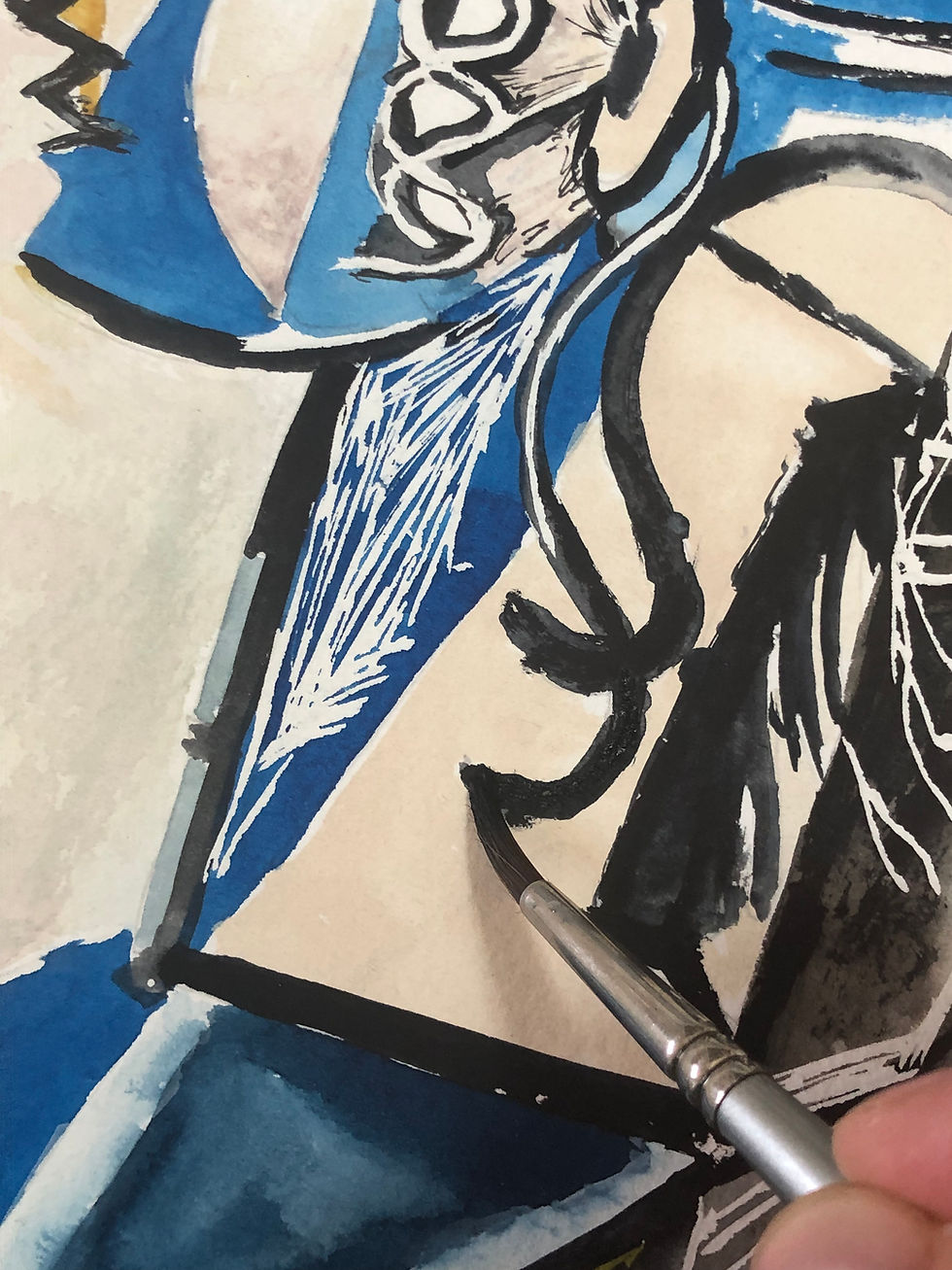
By the end of this painting not only will you have your own copy of ‘Sylvette’ but you will have tried some unconventional watercolour techniques, expanded your knowledge of how to use colour and line in a bold, abstract way and applied your paint using a variety of techniques!
To find out more about this project take a quick look at the video below:
Once you’ve got to grips with the techniques why not try recreating another Picasso piece and see what you will discover!
Happy Painting!


Comments