
Liven up your watercolour with this mixed media Lionfish!

Do you ever wish your watercolour style could be looser or livelier? If so, you might like to consider giving your paintings a little more 'oomph!' by incorporating other media.
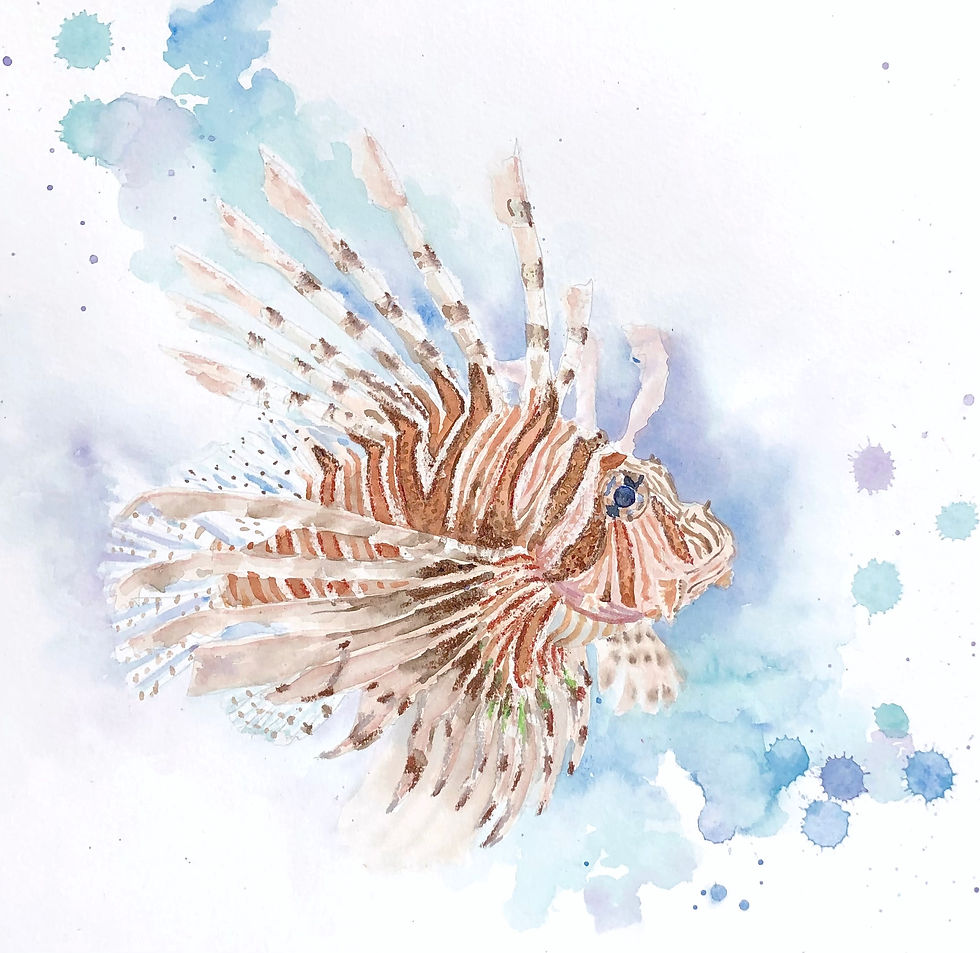
In this Lionfish tutorial I will show you how to use oil pastels and wax alongside your watercolour to create a rich and lively painting.
Did you know, working using different media forces you to apply colour in different ways? This alone can help to you to achieve a greater sense of freedom within your watercolours.
In this step-by-step tutorial I will show you how to use both oil pastels and wax within your work as we create a portrait of a beautiful Lionfish. If you have ever seen a Lionfish in real life you will already know how spectacularly flamboyant they are!

Their pectoral fins spread like wings and their dorsal fin is made of separate spiny shards. These fantastic fins are probably what give the Lionfish its name ~ from the front they give the fish the appearance of having a flowing mane.
Found in the tropical waters of the Indo-Pacific, these spectacular fish have a bit of a reputation as they can be fierce predators. This is especially true where they live as an invasive species off the South East coast of the USA and Caribbean where they are at risk of harming delicate ecosystems. Growing to around 18” these amazing fish come with a warning though as their spines deliver a toxic sting which can cause respiratory problems and even paralysis.

Luckily our beautiful Lionfish portrait is only in danger of giving you messy fingers as we will first apply oil pastel to define his beautiful, bold stripes. We will also combine the oil pastel with clear wax. If you’ve not tried either of these mediums before, you will discover they both act as a resist to watercolour. It’s this property which will help you to work with a less detailed, bolder approach and subsequently develop a looser, bolder style.

Oil pastel adds strong, instant colour and because it is oil based, it has a creamy texture which has the ability to blend with other colours and smudge on the paper. It also resists the paint as oil and water don't mix! Note: oil pastels are not the same as soft pastels which have a powder-like, chalky texture.
Wax also works well as a resist, and although you can also use coloured wax crayons (which work well on rough paper as you can draw with them and produce a textured finish), in this project we will use clear wax (think tealights or birthday candles). Using clear wax adds an element of unpredictability ~ as you can't see it on the paper until you wash over it with paint. This uncertainty means you can't be too precise or detailed in your approach so it's a great way to create a loose look to your work.
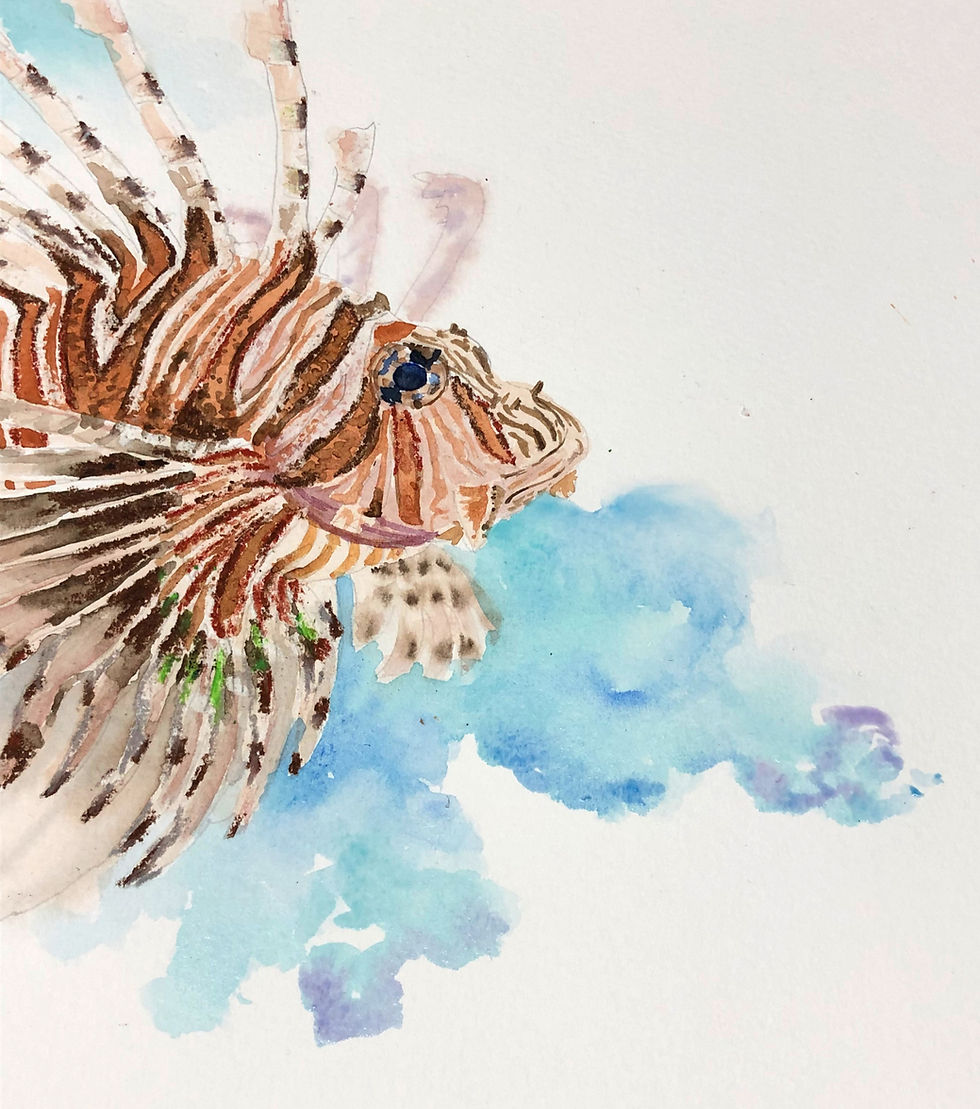

Once your Lionfish is complete, I will show you how to add a loose, flowing background to increase the sense of flow and movement in your work. For that extra splash of colour, I will also show you how to add some pretty paint droplets!
To find out more about this project, take a look at this short video:
I hope you enjoy this mixed media approach to watercolour ~ it's a fab way to introduce new techniques into your paintings and to help loosen up your style ~ experiment with the materials and have fun!
Happy Painting!


Comments