
Late Summer Greenhouse


As this new painting tutorial is released the flowers are turning to seed and Autumn is being ushered in. So in celebration of the changing season my new 'Late Summer Greenhouse' tutorial will bring a soft, mellow vibe to your painting.
I took this lovely photo at a National Trust property in the Lake District called Sizergh Castle. There is something about greenhouses which really appeal to me ~ and the older and more dilapidated they are the better! This one (although not neglected) has a lovely vintage look, particularly with the flowers which are starting to go over and tumble across the path.
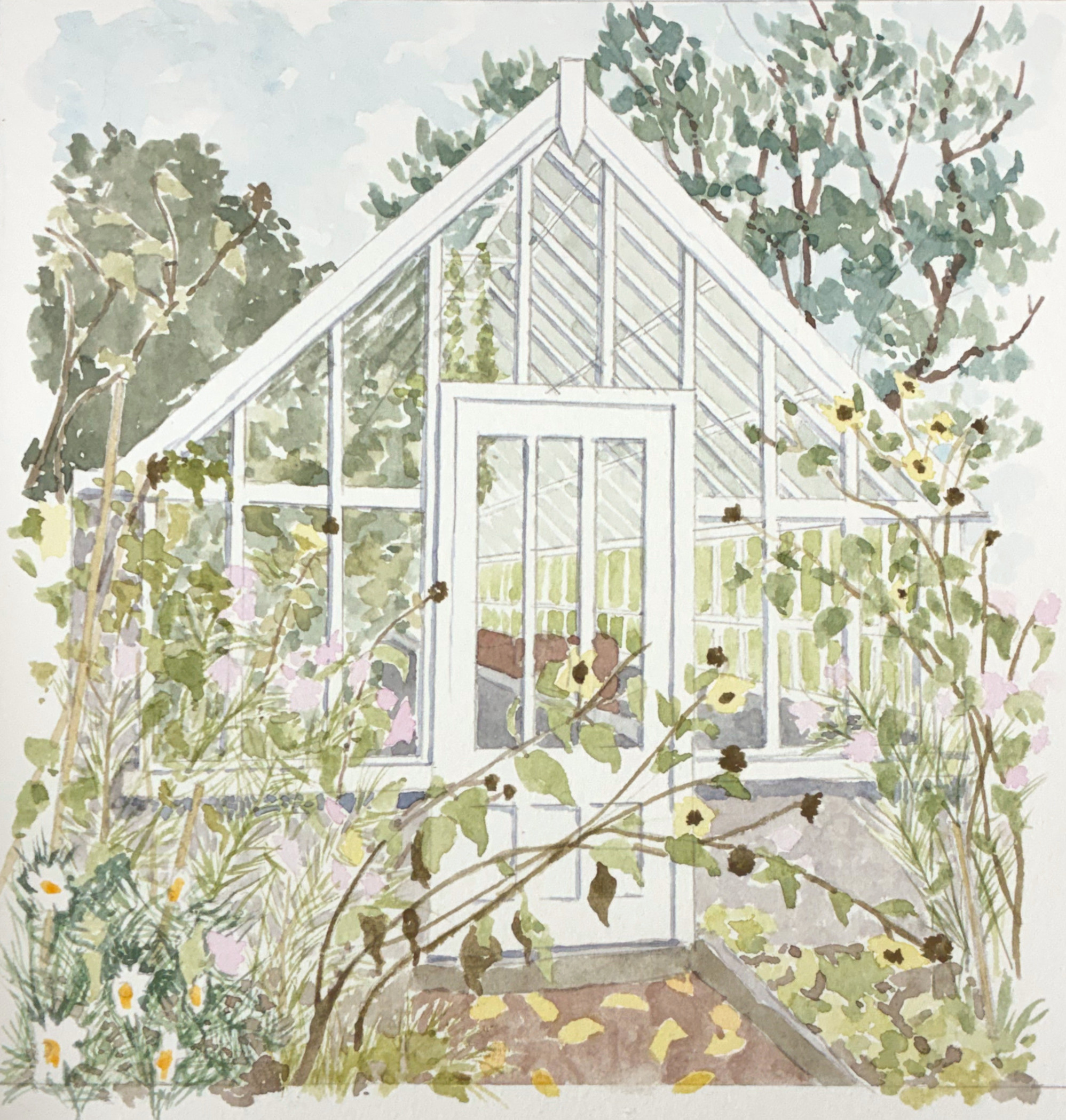
For this tutorial I wanted to create a quiet atmosphere so have thought carefully about my colour palette. I have kept the colours true to life but have given them a washed out appearance by keeping them pale and quite similar in value. This washed out look is a way of evoking the idea that the colour and vibrancy of the summer has mellowed and faded.
As a painter it's important to consider how you would like your final painting to appear. Will it bold? Will it be dynamic? Will it be quiet? Will it be colourful? Will it be realistic? etc. etc. When working from photographs it can be tempting to try and copy the colours and values exactly as you see them without adding your own interpretation. But it's the interpretation which helps you to start your own creative thought process and your own painting style.

Once you know what kind of atmosphere or look you want to create you can think about your techniques. In this project we will work in a controlled way, working onto dry to add the colour. This is a great technique for beginners as you don't need to worry about timing and controlling the paint. Working onto dry means you can build up a range of different marks on the paper to describe the different elements in the painting. Using your brush to 'draw' leaves and flowers will help you to develop your fine motor skills and will help you to interpret shapes into simple brushstrokes.
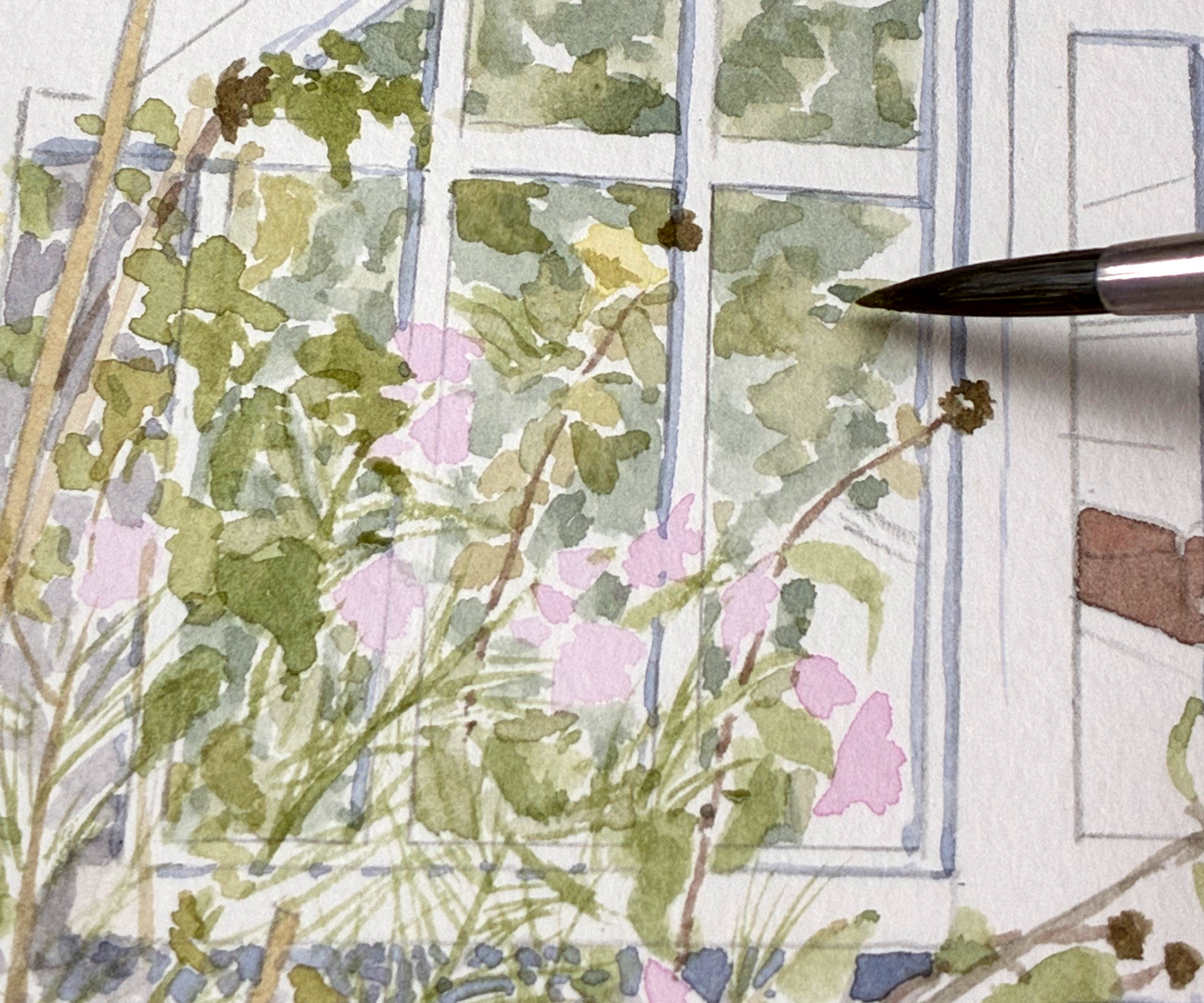
In this technique it is important to work from front to back ~ adding shapes and colours in and around each other to create an interlocking puzzle-like effect. You will start by placing the main shapes and flowers and then add foliage before adding colour in the remaining spaces.
To find out more about this project, take a quick look at the video below:
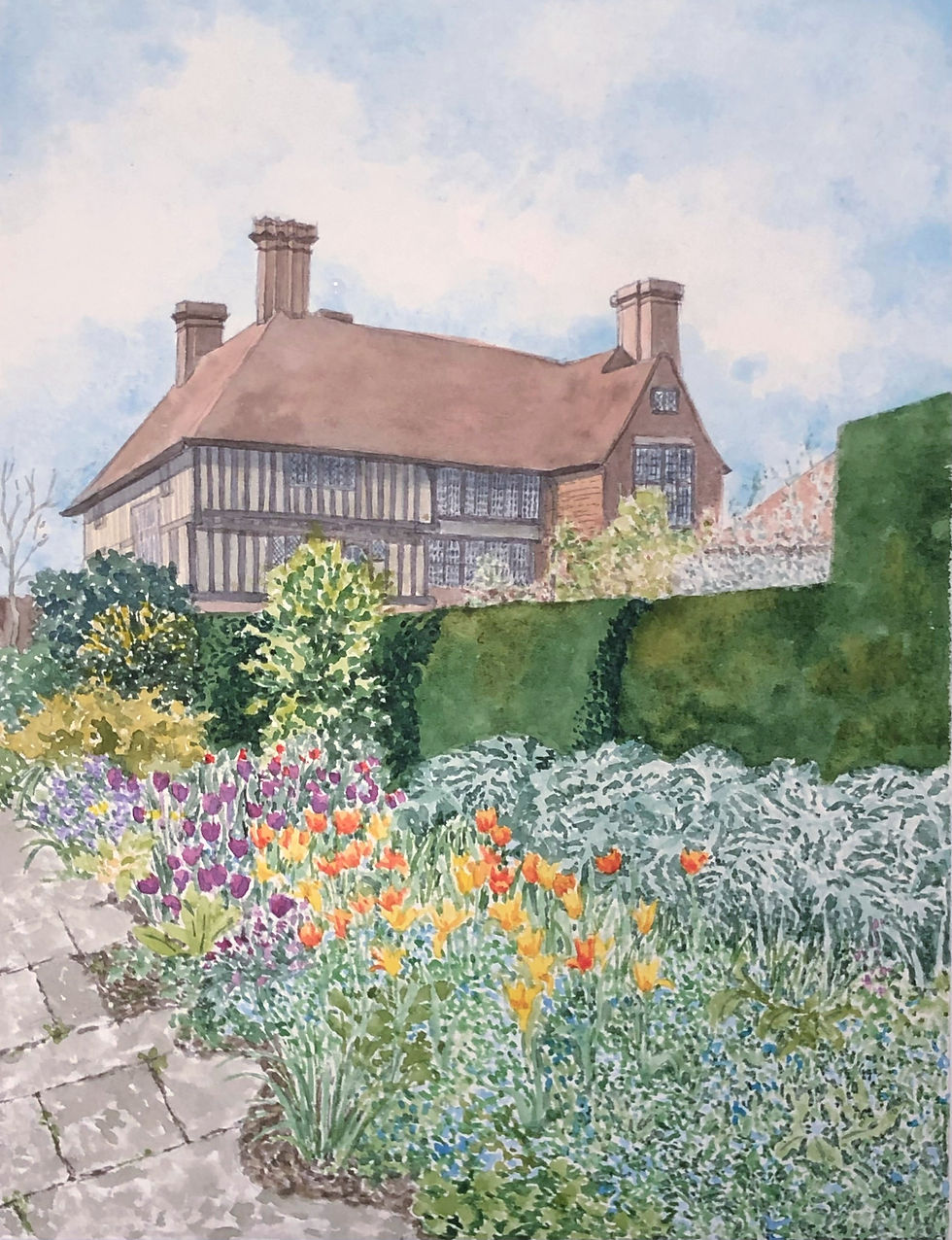
I hope you really enjoy working on this painting ~ it has a simple technique but with a little time and patience you can create a really lovely effect. If you enjoy using this direct brush technique but find working in a small scale difficult ~ remember you can upscale your image and your brushes to make life easier.
If you fancy trying the same technique take a look at the Great Dixter tutorial


Comments